Archives

A Reiki Master’s Hanko Seal

My Personal Hanko

A Personal Symbol of Empowerment

In Japan, seals in general are referred to as inkan or hanko. The first evidence of writing in Japan is a hanko dating from AD 57, made of solid gold and belonging to the Emperor. At first, only the Emperor and his most trusted vassals held a hanko seal, as they were a symbol of the Emperor’s authority. Noble people began using their own personal hanko after 750 AD, and the Samurai began using them sometime in the Middle Ages. At the time, the Samurai were permitted exclusive use of red ink for their hanko impressions. Modernization of these seals began in 1870, and the hanko finally came into general use throughout Japanese society. 

Traditionally, inkan and hanko are engraved on the end of a finger-length stick of stone, wood, bone, or ivory, with a diameter between 25 and 75 millimeters (1 and 3 in). Their carving is a form of calligraphic art. The most common form of this calligraphic art is the Japanese Kanji — the Chinese script.

They are still used in Asia for professional and personal purposes. Most requiring registration with local government offices much like a trademark. Continue reading

A Shared Insight

Learning From Hardship – Sing your own song!

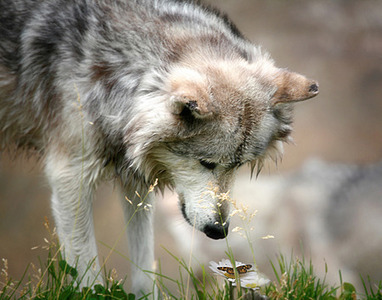
Carole Bourdo - "Wolf Song"

Carole Bourdo – “Wolf Song”

Yesterday I allowed my 9 year old to play on my computer. That turns out to have been a mistake. About an hour into his foray of watching some lego video, he receives a message over the browser window. Instead of reading it and asking his dad or me about it, he clicked a button and went on with his video. Something he has been told NOT to do. And he discovered the reason…he infected my computer with a pretty nasty virus!

Thankfully both Daddy and I are IT geeks. But my IT skills are more related to mainframes and corporate servers, than desk top computers. Thankfully Daddy is the desktop King. It took the entire day from about 10am to midnight to fully correct the infection and ensure everything was ok, running right and safe again. With a few extra checks and tweaks this morning, my laptop is virus free and more tightly secured. Which includes not allowing our little Prince to touch my laptop again!

So..what’s the point to this story…While the King was fixing my machine I let go of that nervous irritated energy by doing some spring cleaning. Which involved turning the cushions over on the couches and the chair I like to sit in with my laptop. When you have a 9 year old, it’s a good idea to vacuum under the cushions once a month. In my chair I found enough miniature legos to build a robot. Along with two pencils, a pen and Oh My Stars! 3 cards from Faery Tarot Deck! I didn’t even know they were missing! Continue reading

“What we think we become” ~ Buddha

Believe In Yourself

Watch your thoughts, for they become words.
Watch your words, for they become actions.
Watch your actions, for they become habits.
Watch your habits, for they become your character.
And watch your character, for it becomes your destiny.
What we think, we become.
                                                     ~ Frank Outlaw

How we think each morning starts the process of creation. Thought is energy that we put into motion on the ethereal plane. It moves around us, through us and walks the path we walk until it manifests in physical form. Once in physical form, the event created by our thought will generate a reaction from us. Again, creating a thought that creates a pattern of energy that we put into motion.

It’s a cycle of energy that we establish around ourselves each moment of our lives. In other words, this is the Law of Accountability in action. What you put out, you get back. The Law of Accountability governs how you live your life and conduct yourself through out your life.

© 2012 Springwolf, D.D., Ph.D. Springwolf Reflections / Springs Haven, LLC. All Rights Reserved.

Sympathies and Prayers for Oak Creek, Wisconsin

The Alpha's

The Gift of Compassion

Everyone at Spring’s Haven wish to express our deepest sympathies, prayers and thoughts for the family, friends and community of the Sikh Temple in Oak Creek, Wisconsin.

This world is large enough to accommodate all beliefs and to share our knowledge, wisdom and understanding in peace. We can allow others to believe as they choose without threatening our own spiritual path or compromising our own enlightenment.

Hate and intolerance have no place in our society or our country! This senseless violence harms everyone not only here in the U.S., but all souls around the world. By remaining silent when crimes of hate occur, one condones the act. By standing up and denouncing the hate out of tolerance and expressing compassion for the victimized we elevate the standards of morality and eliminate the screams of arrogance and overbearing dictatorship either formal or informal.

As my friend Rev. John E. Lewis Jr. said today:
Undermining the religious, political, moral or philosophical views of others in favor of elevating the religious, political, moral or philosophical views of self is arrogant, pathologically absurd and ultimately self-defeating. These dangerous tactics are on the increase by certain individuals and groups who actually believe they will convince others of their conceived supreme position. It may appear to be effective in the short-run, but in the long-run it will fail miserably, and in the process demean the common decency and civility of collective society. Never can any individual or group ultimately succeed by discrediting others in favor of self.

Our our hearts and prayers go out to everyone affected.

© 2012 Springwolf, D.D., Ph.D. Springwolf Reflections / Springs Haven, LLC. All Rights Reserved.

Morning Work – Setting A Positive Flow

What’s On Your Desk?

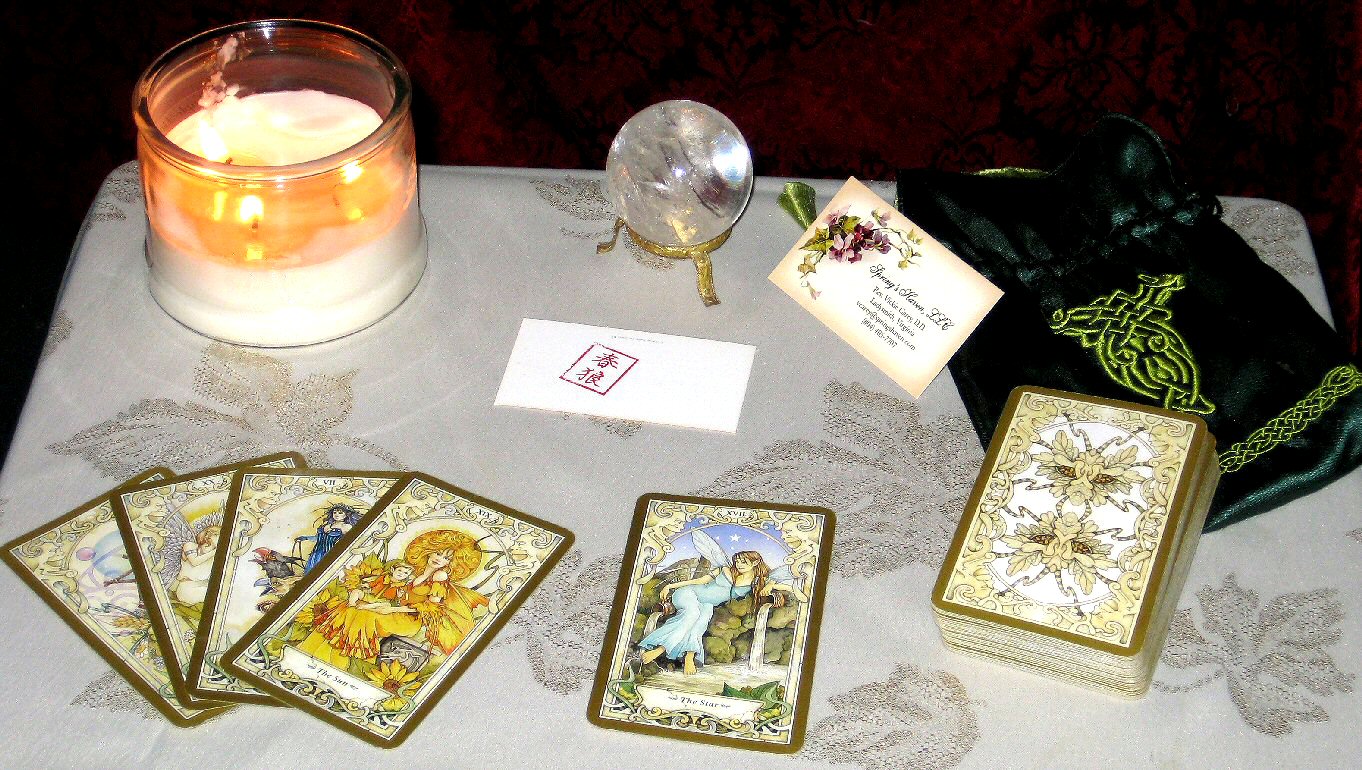
Each morning I get a cup of coffee and settle in for my morning work. That starts with centering and trying to wake up a little. Though sometimes being half asleep actually helps when pulling the Daily Tarot Meditation card. This morning I was thinking about what’s on my little work desk. I like my desk. It makes me feel empowered at the start of the day, connected to the Divine Consciousness and the Faeries I talk to throughout the day, and I think it’s simply lovely covered in my favorite things. When your desk provides a connection to the Divine creative energy within your higher consciousness, it becomes easier to face challenges, solve problems or if you’re like me, it can inspire you to write a Reflection for your blog.  😉

© Springwolf's Tarot Table

© Springwolf’s Tarot Table
Click to Enlarge
1362×770 Desktop Image

If your desk holds things you don’t like or that you dread to look at and deal with, you’re setting that energy up for the entire day. That in turn will impact everything you have to deal with through out your day. Whither it’s on your desk or not. Continue reading

History Of Lughnasadh

The Fire Festival Of The Summer Sun
By Springwolf, D.D., Ph.D.  🐾

Arctic Wolf Fire

“Arctic Wolf Fire”
© Tom-in-Silence

This is the first of the Pagan Harvest Festivals. This is a time where we celebrate the Sun God Lugh, honor the rain and thank the magikal folk of the Tuatha Dé Danann for their help in our own gardens.

As local clans migrated, they took with them their religious and spiritual traditions. Many people believe that during these migrations, names of holidays also changed and Lughnasadh became Lammas. That’s not quite accurate however.

Lammas comes from the Old English word hlafmæsse, which  literally means “loaf mass,”. It was first used in the 15th and 17th centuries by the early Catholic Churches to celebrate the grain provided by the first harvest. In other words, it was another attempt by the early church to co-opt a pagan holiday, make it their own, in order to convert pagans.

Many Anglo-Saxon pagan clans, adopted the name, but still observed the original celebrations of Lugh and the original intent of the holiday. Must pagan purests prefer to ignore the Christianized version of the festival and stick with the early Celtic name of Lughnasadh. As with most things in the world of spirituality, your preferred name should ring true with you. It’s your festival to honor the Sun, the warmth of the summer and their blessings upon the fields. Call it what you feel most connected to, Lughnasadh or Lammas.
Continue reading

Learning To Meditate

How To Get Started – Tips and Tricks

MeditationThere are as many methods and approaches to meditation as there are people on the planet. And that’s a good thing. Because what works for me, may not be what works for you. If you don’t know how to meditate and are looking for what’s right for you, don’t be afraid to try different methods until you find the one you like most. If you feel drawn to a specific culture, you might first try methods that incorporate elements from that culture into a meditation practice. For instance, if you’re drawn to Native American spirituality, try drumming. If you feel drawn to Indian/Hindu culture try a mantra. If you feel drawn to Tibetan culture, try a Buddhist meditation. And so on.

The meditation method I teach is often termed as Free Flowing or Free Form Meditation. It relies on visualization and meditation music. Visualization is a way of focusing your thoughts and raising your energy or vibration to a higher level of consciousness. When thoughts enter your mind that are distracting, you can use a visualization image to move them out. Such as seeing a peaceful ocean wave was over the grocery list and dissolve it from your mind. Continue reading

Merry Friday the 13th One and All

Wise Old WolfFear of Friday The 13th

Once again the thirteen day of the month falls on a Friday and people are wary of the events of the day. I’m astounded by the number of emails we have received this week concerning fear and worry about today.

Fear for Friday the 13th it has more to do with the spread of Christian culture and power than anything else. Even today there are people who want to give “credit” to the early church for creating this evil view in society. While that blame maybe warranted, it’s yet another case of how western Christian cultures believe everything is about them. However there is seriously little written about this superstition prior to the 19th Century (the 1800s) when superstition became common place.

According to Wikipedia:
Superstition is a belief in a false conception of supernatural causality: that one event leads to the cause of another without any physical process linking the two events, such as astrology, omens, witchcraft, etc, that contradicts natural science.

The very nature of superstition vilifies all beliefs that are considered to be non-christian.While astrology was commonly used in western cultures and indo-European kingdoms, it began to fall out of favor during the Inquisitions and increasingly became linked to witchcraft. Omens were seen as messages from nature, such as animal sign, and fortune-telling through the use of bones, tea leaves and a myriad of other tools from nature.

While these things started to be vilified by the Church in its early days, it came full force in the 16th century (1500s) when the Inquisitions were in full swing and the Church was at the height of power. While the power of the courts drove beliefs in these concepts underground and out of the public eye, they still existed behind closed doors and whispered in all levels of society. It took another 100 to 200 years for these practices to finally become denounced in all areas of western culture and dismissed by the average person in public and in private.

Thankfully the Church was not able to eradicate belief in these things, or the practice and knowledge of these things and events from history.

So here’s a different perspective. If you don’t follow the Christian religion, then why would you follow their fears and vilification of what typically for pagans is a great day of celebration and joy? Take some time to read up on the number 13 and Friday prior to the influences of Christianity.

The History of Friday the 13th.

© 2012 Springwolf, D.D., Ph.D. Springwolf Reflections / Springs Haven, LLC. All Rights Reserved.

Humility & Confidence

What Ego Can Teach You

Dalai Lama on Piers Morgan Tonight April 25, 2012:
“I describe myself as a simple Buddhist monk. No more, no less. And I am one of the seven billion human being. Basically we are the same… your emotion, my emotion, your mind, my mind.., same physical. So I always look [at it] that way. We are the same.”

Believe In Yourself

What is a healthy ego? Today when someone mentions the ego it’s usually in a negative connotation. It is the “I” or self of any person. It is the “I” person as thinking, feeling, and willing, and distinguishing itself from the selves of others and from objects of its thought. “I” think, therefore “I” am. It is the self-esteem and inner confidence of “me”. 

A healthy ego doesn’t need to be right all the time. One can be a confident person and accept the idea that they don’t know everything, but they’re willing to explore what they don’t know. They accept that others have differing views and they’re willing to  learn about those views without worry or fear of losing what they believe. They are able to look at new information and data, research it, confirm or deny it and merge it into their own perspectives as appropriate, to broadening their understanding of the world, their spirit within and the Divine Universe around them.  Continue reading

Celebrating the Summer Solstice

The Mid-Summer Festival
By Springwolf, D.D., Ph.D.  🐾

The Summer Solstice is a pre-Christian holiday and has been celebrated throughout Europe and many parts of the world for eons. The solstice itself has remained a special moment of the annual cycle of the year since Neolithic times.

In Anglo-Saxon form, the holiday is known as Litha. A Germanic word for June and meaning mid-summer. In Irish form Meitheam. (From Old Irish mithem (“midsummer, June”), from Proto-Celtic *medjo-samīno- (compare Welsh Mehefin)).

Today Solstice celebrations center around the astronomical timing of the summer solstice. But many pagans still hold to traditional lunar calendar celebrations holding the rite at sunset on June 20th, the 21st or June 24, the day of the solstice in Roman times.

Like most pagan holidays, the early Christian Church assimilated the holiday into their calendar and original Celtic celebrations slowly faded. The “new” holiday is associated with the nativity of John the Baptist, which is observed on, June 24. Knowing that pagans followed a lunar calendar and began their celebrations at sunset on the eve before the Gregorian calendar date, the early church established St John’s Eve on the evening of June 23. This is the eve of celebration before the Feast Day of St John the Baptist. Continue reading